

The latest news in women's health research from our BIRCWH scholars and beyond.
Monday, February 18, 2013
Female Mortality Rates on the Rise in the US

Monday, January 28, 2013
Dr. Stacie Geller is named the 2012 Distinguished Research of the Year in Clinical Sciences!
 Congratulations to Dr. Stacie Geller who was named the 2012 Distinguished Researcher of the Year in Clinical Sciences by
the University of Illinois at Chicago. A complete description of this
high honor and Dr. Geller's achievements is available at the UIC News Center.
Monday, January 14, 2013
Congratulations, Sadia!

Thursday, January 3, 2013
Two BIRCWH Scholars Receive OVCR Funding!
Two of our BIRCWH scholars recently received a Campus Research Board (CRB) grant from the Office of the Vice Chancellor of Research (OVCR) at the University of Illinois at Chicago to fund novel women's health research initiatives:
Dr. Kirstie Danielson received a grant for her proposal titled, "Role of the Bone Hormone Osteocalcin in Type 1 Diabetes and Islet Transplantation," which aims to determine whether a biomarker called blood osteocalcin is related to lower blood glucose levels. The biomarker osteocalcin is thought to predict better response to insulin therapy and beta-cell transplant, key treatments in the management of type 1 diabetes, particularly among women. Results from Dr. Danielson's work will have a clear impact on type 1 diabetes management for the many women affected by the disease.
Dr. Leah Rubin received a CRB grant from OVCR for her proposal titled, "A pilot study: Sex differences in cognitive response to a hydrocortisone challenge in HIV." Dr. Rubin's grant will build upon her previous work in this field, which seeks to determine the role of cortisol, a stress hormone, on cognition, particularly among HIV positive women. Dr. Rubin's novel work proposes that stress can negatively impact cognition in HIV positive women. Research has demonstrated that even among healthy men and women there is a notable difference in stress response, and healthy women have been shown to be more vulnerable than healthy men to the cognitive effects of cortisol. By expanding upon this prior work, Dr. Rubin will advance both basic science research and practice guidelines for HIV positive women.

Congratulations, Dr. Danielson and Dr. Rubin, for your continued success as women's health scholars and researchers!
Dr. Kirstie Danielson received a grant for her proposal titled, "Role of the Bone Hormone Osteocalcin in Type 1 Diabetes and Islet Transplantation," which aims to determine whether a biomarker called blood osteocalcin is related to lower blood glucose levels. The biomarker osteocalcin is thought to predict better response to insulin therapy and beta-cell transplant, key treatments in the management of type 1 diabetes, particularly among women. Results from Dr. Danielson's work will have a clear impact on type 1 diabetes management for the many women affected by the disease.

Dr. Leah Rubin received a CRB grant from OVCR for her proposal titled, "A pilot study: Sex differences in cognitive response to a hydrocortisone challenge in HIV." Dr. Rubin's grant will build upon her previous work in this field, which seeks to determine the role of cortisol, a stress hormone, on cognition, particularly among HIV positive women. Dr. Rubin's novel work proposes that stress can negatively impact cognition in HIV positive women. Research has demonstrated that even among healthy men and women there is a notable difference in stress response, and healthy women have been shown to be more vulnerable than healthy men to the cognitive effects of cortisol. By expanding upon this prior work, Dr. Rubin will advance both basic science research and practice guidelines for HIV positive women.
Congratulations, Dr. Danielson and Dr. Rubin, for your continued success as women's health scholars and researchers!
Thursday, December 13, 2012
Dr. Thasarat Vajaranant receives funding through The WHI Extension Feasibility Study
 BIRCWH Scholar Dr. Thasarat Vajaranant received
funding through The WHI Extension Feasibility Study Funding Program for her proposal
titled “A Feasibility Study to Assess the Accuracy of Self-reported Glaucoma
outcomes and Participant Interest in Participating in Ancillary Glaucoma
Studies.” This study aims to test the feasibility of obtaining medical records
to assess the accuracy of self-reported glaucoma outcomes and participant
interest in participating in additional glaucoma studies.
Primary
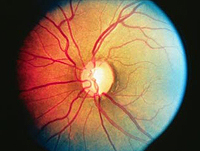
open-angle glaucoma (POAG), a prevalent, chronic, blinding condition,
negatively impacts general health and daily life functions among vulnerable,
elderly women. Globally, women
comprise the majority of individuals with glaucoma and blindness. Recent evidence
suggests that specific genes, influenced by environmental exposure, contribute
to POAG. POAG is more prevalent among African Americans (5.6%)
and Hispanics (4.7%) compared with Whites (1.7%), but there is limited
information on the gene-environment interactions among minorities. In this study, Dr. Vajaranant will test the feasibility of obtaining medical records to assess the
accuracy of self-reported glaucoma outcomes and participant interest in
participating in ancillary glaucoma studies. If successful, this research model could serve as a cost-effective way to examine the role of the gene-environment on POAG in the future. Greater insight into the role of gene-environment on POAG holds great potential in improving eye health and preventing a common cause among blindness that affects elderly women of all races and ethnicities.
Congrats, Dr. Vajaranant!
Wednesday, December 5, 2012
Ovarian Cancer & Ovulation: Is there a link?

Former BIRCWH scholar Joanna Burdette was featured in the November 28 issue of UIC news for her work on examining the link between ovarian cancer and ovulation. While ovarian cancer remains prevalent, especially among post-menopausal women, the specific epithelial subtype responsible for disease development is not entirely known.
Dr. Burdette is exploring the relationship between the hormonal changes involved in ovulation and the development of ovarian cancer- specfically, how ovulation may impact a signaling pathway that transforms healthy cells into cancer. Her works foucses on the development of ovarian cancer in the cells of two distinct areas: the ovarian surface and the lining of the fallopian tubes.
Dr. Burdette is accomplishing her work though the development of three-dimensional cell cultures within the laboratory, and focusing on one particular signaling molecule called Akt, which has been demonstrated to be activated in the development of ovarian cancer .
The full article, featuring an interview with Dr. Burdette, can be found online.
We continue to be impressed and inspired by our BIRCWH scholars, both present and former, and their contributions to women's health research!
Thursday, November 15, 2012
What Makes a Mentor?

Here at the UIC BIRCWH program we are continually defining and revising the concept of mentorship. We utilize feedback from our scholars, mentors, and program development team in order to pinpoint our areas of success as well as areas for improvement. Mentorship is what defines our program- but what defines mentorship?
Our team of scholars and mentors recently revisited an article by Andrés Martin titled, “Ignition Sequence: On Mentorship,” which explores what mentorship is (and is not), and offers insights into how to improve modern-day mentoring. Martin describes what we have all experienced: a process that frequently takes place, but that is rarely articulated.
Why does mentorship commonly elude articulation? How can we best capture the experience of both mentoring and mentorship? Which matrices best measure effective mentoring? These are questions with undoubtedly complicated answers that we will continue to mull over, and we hope that by initiating a discussion with our colleagues we can better define the process of mentorship, and therefore improve mentoring on a larger scale.
The full article by Andrés Martin is available on the UIC BIRWCH website.
Subscribe to:
Posts (Atom)