Thursday, January 19, 2012

January is Cervical Cancer Awareness Month!

January has been designated as the Cervical Health Awareness Month by the United States Congress. As part of this special recognition, The Pearl of Wisdom Campaign to Prevent Cervical Cancer has launched its “Take the Pearl Pledge” initiative, an effort which urges women to take control of their health through preventive screening efforts. The campaign asks women to schedule their annual gynecologic examination, wear a Pearl of Wisdom in support of cervical cancer prevention, and encourage 5 friends to do the same. Launched in 2009 by the European Cervical Cancer Association, this campaign is a united, global effort to raise awareness of the opportunities now available to prevent cervical cancer and includes support from over 100 organizations across Europe. Cancer charities, cancer treatment centers, medical associations, university teaching hospitals, and health education organizations have all pledeged their committment to support cervical cancer prevention.

Cervical cancer is distinguished as the second leading cancer in women worldwide, with more than 12,200 women expected to be diagnosed this year alone, and 4,210 of these women predicted to die from this cancer. The good news is that cervical cancer is almost always preventable— routine Pap smears and HPV testing can be utilized to detect the cancer in its earliest (and most treatable) stages, while the HPV vaccine can prevent the cancer altogether. Therefore, with proper screening and vaccination, no woman should die from this disease.


According to the Pearl of Wisdom campaign, every woman should be empowered to take control of her health through the following measures:

  • Girls and young women: Ask your healthcare provider about the HPV vaccine, which protects against the two types of HPV (human papillomavirus) that cause the majority of cervical cancers. The vaccines are recommended for girls 11 to 12 years old, and are approved for girls and young women up to age 26. Even women who have been vaccinated will still need to be screened.
  • Women age 21 or older: Get the Pap test, which detects abnormal cells that can lead to cervical cancer.
  • Women age 30 or older: Get the Pap test and the HPV test together as part of routine cervical cancer screening. The HPV test detects the virus that causes cervical cancer, identifying those women at increased risk who will need to be monitored more closely.
Take part in this important campaign to take charge of your own health and support the health of women worldwide!

Thursday, January 12, 2012

The Women's Health and Minority Checkbook

A new statistical resource on women’s health is now available! The Women’s Health and Mortality Chartbook was released by the Office on Women’s Health and provides an easy-to-use collection of current jurisdiction data on critical issues of relevance to women. In total, 28 different health indicators are featured, highlighting key issues related to women’s health and providing the most accurate and up-to-date data available for each state, including Guam, Puerto Rico, and the US Virgin Islands. Indicators include major causes of death (heart disease, cancers, and stroke, among others) as well as health risk factors (obesity, smoking, high blood pressure, etc.) and preventive care measures (mammogram, pap smear, colorectal screening, etc.) Complete profiles for all states are available as pdf documents, with detailed technical notes and documents also available as additional resources.

Data available for Illinois indicates the following:

“Of the state’s 6.5 million women, nearly two thirds are non-Hispanic White. Its largest minority populations are non-Hispanic Black, at 16 percent, and Hispanic, at 14 percent. It ranks in the top 15 states in its low rates of death for suicide, unintentional injuries, diabetes-related causes and chronic obstructive pulmonary diseases. It has a much poorer record in rates of death for breast cancer, coronary heart disease, influenza and pneumonia, and colorectal cancer. Not surprisingly, it ranks among the worst states in the percentage of women who have had recent colorectal cancer screening. Illinois ranks in the middle of the nation in cholesterol screening, mammograms, and Pap smears. Eighty-seven percent of its women have health insurance, with Hispanic women having the lowest rate of insurance coverage, at 68 percent. Eighty-seven percent of its women have health insurance, with Hispanic women having the lowest rate of insurance coverage, at 68 percent.”

A look at breast cancer death rates across the nation demonstrates the geographic variability of this indicator. Certain areas of the south and east have the highest rates of breast cancer deaths among women, while the west exhibits the lowest rates, as seen below:

Clearly, this data has implications for women's health research and practice in Illinois and beyond. At a local level, there is a need to increase screening and prevention programs for both colorectal and breast cancer, and significant improvements are also possible in the areas of cholesterol screening, mammograms, and Pap smears. At a national level, geographic disparities are present for every indicator, indicating the need for continued research and prevention programs that are tailored to the prominent needs of the local population. Our own BIRCWH scholars are actively engaged in a number of research efforts that address the health indicators presented in this publication.

Access the Women’s Health and Mortality Chartbook to learn more about your state and our greater nation. The full publication, which offers profile of each state as well as national comparison rates for the each indicator, is also available online.

Tuesday, December 20, 2011

UIC BIRCWH Scholar Named One of the Top Chicago Doctors

A special congratulations to Dr. Thasarat Vajaranant! Dr. Vajaranant is honored in Chicago Magazine's January 2012 issue as one of the top doctors in the Chicago area for her work in women's eye health. Dr. Vajaranant was chosen from among the more than 35,000 doctors in the metroland Chicago area and recognized for her unique clinical expertise. The magazine is currently available at newstands throughout Chicago or online.

As a BIRCWH scholar, Dr. Vajaranant's research goal is to build a research program in women’s eye health. Specifically, she hopes to determine gender difference in eye diseases and to identify women at risk as well as gender specific risk factors for blindness. Worldwide, blindness is more common in women, and glaucoma is one of major causes of irreversible blindness. Dr. Vajaranant is investigating gender difference in eye diseases and glaucoma using a database from the Los Angeles Latino Eye Study (LALES), a large population based study. In addition, she is examining the neuroprotective effect of female sex hormones, and studying the association between the decline in the female sex hormones with aging and the development of glaucoma and glaucoma progression.

Monday, December 12, 2011

FDA Decision on Emergency Contraception Overruled

Plan B, the emergency contraception pill that prevents pregnancy after unprotected sex, has been the subject of much debate and disagreement since it was first approved by the FDA in 1999. The initial version of this contraception has evolved from a two-step pill series into a one-time dose, taken within 72 hours of unprotected sex. In 2006, the FDA approved over-the-counter purchase of the drug for women 17 and over; under the initial approval, those under 17 still required a prescription to purchase.  Most recently, the FDA determined that Plan B should be available as an over-the-counter option for any women or girls, with no prescription necessary, deeming  the drug safe and effective for adolescents to use properly without the intervention of a healthcare provider. This decision marked a monumental step forward in women’s access to contraceptive options and rights towards contraceptive decision-making.


Plan B One-Step, a high dose of the hormone levonorgesterel,
prevents pregnancy if given within 72 hrs of unprotected sex.
Unfortunately, however, the decision was short-lived. For the first time in our nation’s history, the Health and Human Services secretary publicly overruled the FDA’s decision, effectively refusing to allow over-the-counter provision of Plan B. Citing a lack of evidence around the safety of the drug for younger girls, Kathleen Sebelius acted within the same day that the FDA decision was made, raising concerns about whether 11-year olds would fully comprehend the product’s label and appropriate use. Legally, as the HHS secretary, Ms. Sebelius has the authority to overrule the FDA, but her act is unprecedented.  As to be expected, her actions ignited significant backlash among many. As a result of her appeal, Plan B will continue to be sold behind the counter at pharmacies, with young women under the age of 17 requiring a prescription from a medical provider.

Politics and women’s reproductive rights seem to exist in a state of fluctuating conflict, with scientific research and evidence somehow guiding arguments for both competing sides.  Arguments like those surrounding the Plan B debate point to the need for continued responsible research into women’s health issues to ensure that political and legal decision-making is firmly grounded in evidence, not ideology. The current evidence suggests that most women, including adolescents as young as 12, have consistently demonstrated a good understanding of how the drug is used and occasions that warrant its use. As teen pregnancy rates continue to rise, Plan B will remain a contested yet viable option to prevent undesired pregnancies. While Plan B is not an optimal first-line option for birth control, typical use of conventional birth control methods indicates a surprisingly high rate of failure (most often due to human error), pointing to the unique value of Plan B within the contraceptive market and the need to make this option accessible to women of all ages.

Thursday, November 17, 2011

8th Annual Interdisciplinary Women's Health Research Symposium

The Office of Research on Women's Health (ORWH) is hosting the 8th Annual Interdisciplinary Women's Health Research Symposium today at the NIH headquarters. The symposium will feature scientific advances from two ORWH-sponsored initiatives: the BIRCWH program and the Specialized Centers of Research (SCOR) on Sex and Gender Factors Affecting Women's Health program. Our BIRCWH scholars and program directors will join BIRCWH scholars, mentors, and program directors from across the nation to share research developments, strengthen existing networks, and enhance interdisciplinary efforts.

Michelle A. Kominiarek, M.D., one of our current BIRCWH scholars, was chosen for an oral presentation during the event. Her talk, titled, "Gestational Weight Gain and Obesity: Is 20 Pounds Too Much?" will share exciting developments in research on weight gain during pregnancy. Each of our other BIRCWH scholars will present an abstract at the poster session this evening, highlighting their diverse research interests and unique intellectual insight. Abstracts for the poster session are available online.

The 8th Annual Interdisciplinary Women's Health Research Symposium also coincides with the Annual BIRCWH Scholars Meeting, Annual BIRCWH Directors Meeting, and BIRCWH Scholars Day on the Hill, marking a busy weekend for our scholars and mentors in our nation's capital. We look forward to hearing from our scholars about this exciting annual event and are confident that they are fully immersed in a productive, insightful, and inspiring dialogue.

Friday, November 11, 2011

New Electronic Resource through Stanford University

While the concept of gendered research is gaining momentum among researchers and funders alike, practical and applicable resources in the area remain scarce. An exciting new resource recently released by The Clayman Institute for Gender Research at Stanford University fills this need through an innovative and user-friendly platform. 


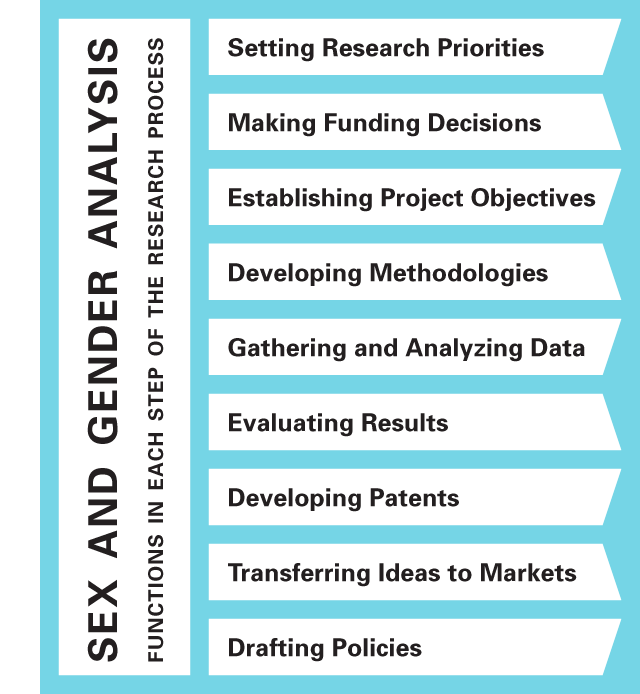
The Gendered Innovations in Science, Health & Medicine, and Engineering Project aims to develop practical methods of sex and gender analysis for scientists and engineers and to provide case studies as concrete illustrations of how sex and gender analysis leads to innovation. Through these multimedia resources, the team behind the effort hopes to promote the prospective analysis of sex and gender throughout all phases of research.


The website offers a myriad of resources related to gendered research, including methods, terms, and checklists, providing concrete steps for incorporating sex and gender analyses into health and biomedical research. Relevant case studies demonstrate how these analytical strategies can function in the real-world setting.


This effort marks a true step forward for gendered research. By training the next generation of researchers to both be aware of gendered perspectives and to integrate gender awareness from the first conceptualizations of a project, we can establish new standards of practice in gendered research. What is truly unique about this project is the approach taken to advocate for gendered research; gender is not overemphasized or underemphasized, but understood within its context and application. Gendered approaches are deemed unnecessary when they create divides that do not exist, but all the more necessary when used to distinguish inherent and organic differences. 


This resource clearly has great potential and utility. Looking forward, we will all need to lend a hand in disseminating the material and integrating it into practice. The BIRCWH team here at UIC is eager to explore this resource and begin to adapt some of the practical applications into our own practices.

Friday, November 4, 2011

Welcome to the UIC BIRCWH Blog!

The Building Interdisciplinary Research Careers in Women's Health (BIRCWH) program at UIC is excited to annouce the launch of our new blog! Our hope is that this blog will serve as a platform from which to disseminate the latest research in women's health, from both our local scholars as well as national and international experts and organizations. We hope to engage an electronic community in exciting conversations about developments in women's health research, as well as offer news and resources to the greater community. Our scholars have been active on the UIC campus and surrounding medical district, but it's time to take our impact to the next level.

We are excited to join this new platform, and look forward to partnerships with the many individuals and organizations that support research and career development in women's health. Our blog will feature guest posts from our scholars as developments occur and accomplishments are awarded, as well as annoucements aboout upcoming events at UIC and beyond.

Welcome, and we look forward to an exciting future!